
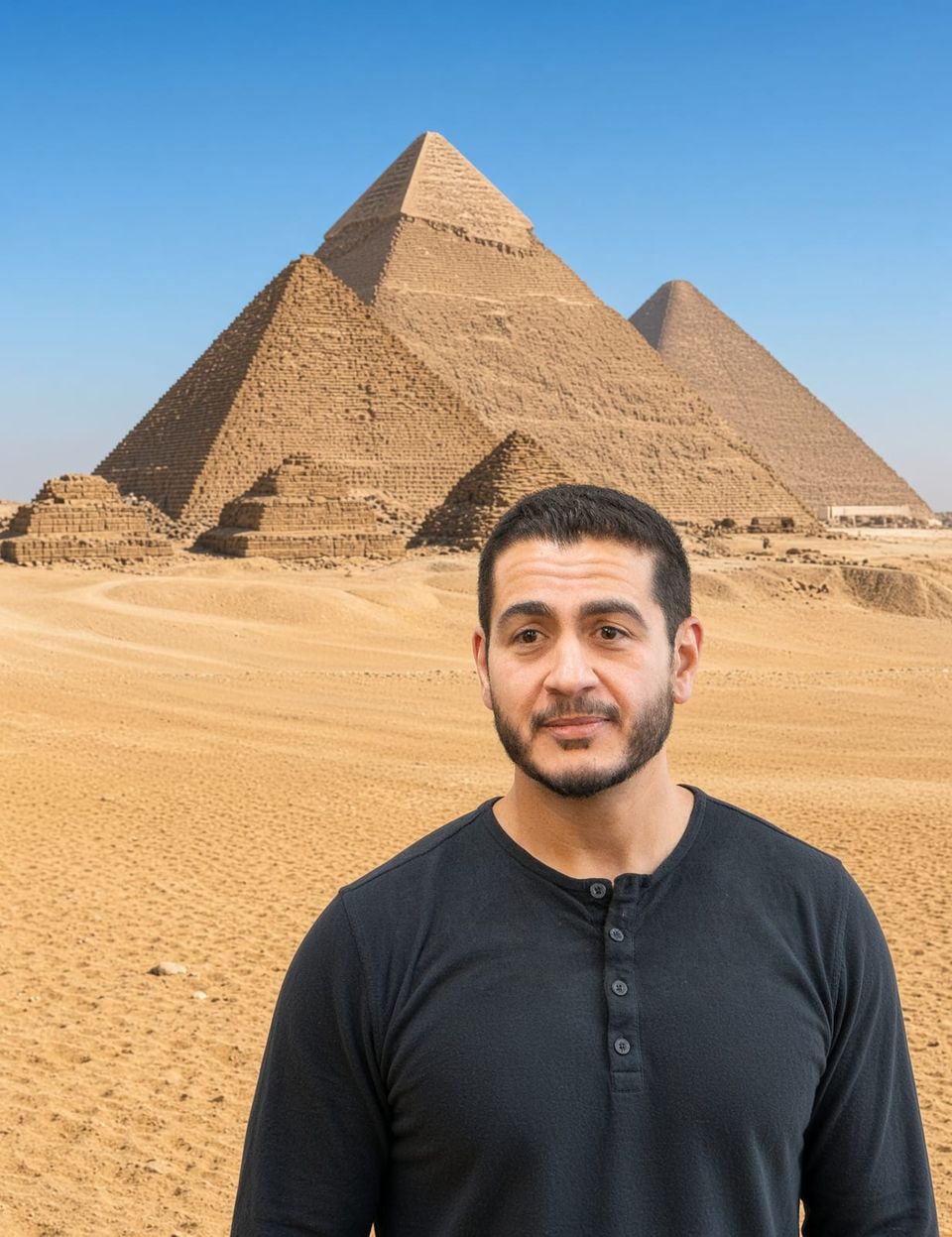
Is Michigan Democratic Senate candidate Abdul El-Sayed a dual US-Egyptian citizen?
That question has dogged his campaign for months, with the Free Beacon reporting yesterday that AES, as he has become known, has now indicated at least twice that he does indeed hold Egyptian and American citizenship.
Now, a Crimson Hub review of Egyptian nationality laws prompted by a tip from a source with ties to moderates in AES’ family’s home country indicates that as a matter of Egyptian law, AES is likely to be a dual national and not simply a US citizen, no matter what his campaign is now claiming—even though it’s a little complicated.
Here’s what we found.
Egypt’s nationality law is set out in Law No. 26 of 1975 Concerning Egyptian Nationality.
Under that law, the children of Egyptian citizens automatically derive Egyptian citizenship from their parents.
AES was born in the US in 1984, after his parents—Egyptian citizens—had immigrated to the US, but notably six years before they naturalized as US citizens.
So AES certainly began life as an Egyptian citizen, as well as an American who acquired US citizenship upon his birth.
The big question is what happened after that.
Notably, under Egyptian law, AES’ parents’ decision to naturalize would not have automatically terminated their Egyptian citizenship.
That’s because Egyptian law states that “An Egyptian may not acquire a foreign nationality except after obtaining a permission therefor, to be issued by decree of the Minister of Interior. Otherwise, he shall continue to be regarded in all cases as Egyptian from all points of view, unless the Council of Ministers decide to strip him of the nationality according to the provisions of article 16 of the present law.”
In addition, “An Egyptian who acquires a foreign nationality shall forfeit the Egyptian nationality, if he has been permitted to obtain the foreign nationality. However, a permission to acquire a foreign nationality, may also comprise the permission for
him, his wife and minor children, to retain the Egyptian nationality. If within a period not
exceeding one year from the date he acquires the foreign nationality, he declares his wish to benefit thereby, they shall retain their Egyptian nationality, despite their acquiring the foreign nationality.”
The big question is, did either of AES’ parents ever get permission to naturalize as US citizens from the Egyptian government?
If not—as seems probable, given the bureaucracy that doing so would entail—they would still be considered Egyptians today, unless the Egyptian government had proactively decided to strip them of their Egyptian nationality. A failure to renew a passport, or use a passport, or return to Egypt, is not enough to lose Egyptian nationality.
If so, then AES would likely be considered American only—unless any permission granted to his parents to forfeit Egyptian nationality made provision for him to retain it and he proactively decided to do so within that one year period.
Based on AES’ statements, it does not sound like the latter scenario applied—and he would know, because he would have had to make the application to retain Egyptian nationality himself.
But he has also not indicated publicly that either of his parents gained permission to forfeit their Egyptian citizenship, and again, having sought and gained that permission would have entailed quite a bit of hassle.
It’s possible that correct procedure was followed, but there’s nothing to indicate it was. And humans being humans, we’d be willing to bet AES’ parents did not go to these lengths.
That would make him, and them, Egyptian and US citizens today.
And it would make the two instances in which AES has described himself as a US citizen accurate.
AES’ campaign’s statement to the Free Beacon also hints at this probability.
Campaign spokeswoman Roxie Richner told the outlet that "Abdul is not a dual citizen by any verifiable metric and never has been.” She added that AES was "told as a child that his grandfather had pursued Egyptian citizenship on his behalf, for which he was eligible due to his parents being born in Egypt."
That statement suggests the campaign has nothing to corroborate a suggestion that AES’ parents followed the steps required to forfeit their Egyptian citizenship, otherwise Richner would have explicitly referenced the event.
And as a matter of Egyptian law, what AES’ grandparents did or did not do is irrelevant to the nationality question. The issue is entirely whether his parents forfeited citizenship, and if so, on what terms, since all indicators are that AES himself has not engaged with the Egyptian government surrounding matters of his nationality.
AES is not the first high-profile US political candidate to face questions about his nationality.
During the 2012 presidential contest, it emerged that Michele Bachmann had acquired Swiss citizenship by virtue of her marriage. Upon that story breaking, she proactively forfeited Swiss citizenship.
During 2016, Republican consultant Liz Mair, who is herself a dual US-UK national, asserted that as a matter of British nationality law, President Trump would also be considered a dual US-UK national by default—again, unless Trump or his mother had proactively forefeited British nationality, a relatively difficult task.
Current California Republican gubernatorial candidate Steve Hilton is an immigrant from the UK, who proactively gave up his UK citizenship after naturalizing as a US citizen.
Sen. Bernie Moreno is an immigrant from Colombia who likewise renounced his Colombian citizenship upon naturalizing as an American.
The big difference between all of these figures and AES, however, is that AES has long espoused ideas that are anathema to the current Egyptian government and viewed as sympathetic, at best, to the perspective of Egypt’s Muslim Brotherhood—who controlled the Egyptian government prior to current leaders taking back power via a coup.
According to AES, this led to him being hassled by authorities during a visit he made to Egypt years ago.
The current Egyptian regime is extremely hostile to the Muslim Brotherhood and anyone regarded as a sympathizer, and has been criticized for mass imprisonments and travel bans ostensibly executed for the purposes of containing religious extremism.
It has preferred that approach with regard to dual nationals who hold Egyptian citizenship, as opposed to proactive expulsion or deportation, as the case of Alaa Abdel Fatah, a dual UK-Egyptian national, exposed.
Should AES be elected and visit Egypt, he would likely not receive a warm welcome.
And assuming he does remain an Egyptian citizen, as appears probable, Egypt might have jurisdiction over him that the country might not with regard to other US citizens. That could mean trouble for a sitting US Senator on the grounds of alleged Islamic extremism—a first in US politics, and a potential serious problem vis a vis a critical US ally in the Middle East.
Comments ()