

Two under-the-radar moves suggest someone in the room is actually reading the actuarial tables.
Nobody throws a party for incremental Medicare reform. There are no campaign rallies for bundled payment models. Prior authorization pilots do not trend on X. Which is probably why almost nobody has noticed that the Trump administration is making a couple of genuinely interesting moves to rein in Medicare spending.
First, the big one this week. Axios reports that Medicare officials have expanded a bundled-payment pilot for hip, knee, and ankle replacements to most hospitals nationwide. The program, dubbed CJR-X, sets spending targets for post-surgical care delivered within 90 days of an operation. Hospitals that come in under the target keep the difference. Hospitals that overshoot pay Medicare back. The original version of this pilot ran from 2016 through 2024 in selected regions and generated over $112 million in savings in just its sixth and seventh years. The nationwide expansion is projected to save $725 million over five years. Quality measures are baked into the formula, so this is not a crude cost-cutting exercise. It is an attempt to get hospitals to actually manage spending on some of the most common surgeries seniors undergo.

Hospitals, naturally, hate it. The Federation of American Hospitals called mandatory participation "an overreach of agency authority" and hinted at litigation. The American Hospital Association warned it could become "a permanent payment cut." These are the same organizations that have spent decades treating fee-for-service Medicare as an all-you-can-bill buffet, so their objections should be weighed accordingly.
Second, there is the WISeR program, which launched earlier this year in six states. WISeR introduces prior authorization requirements into traditional fee-for-service Medicare for the first time, targeting services CMS considers prone to overuse: skin substitutes, nerve stimulator implants, knee arthroscopy, and the like. Traditional Medicare has historically operated without prior authorization, which is a polite way of saying that providers could order whatever they wanted and bill taxpayers. The program uses AI alongside human clinical review, covers decisions within 72 hours, and includes a "gold card" exemption for providers with clean track records. Democrats have attacked it, which is a reasonable signal that someone's ox is getting gored.
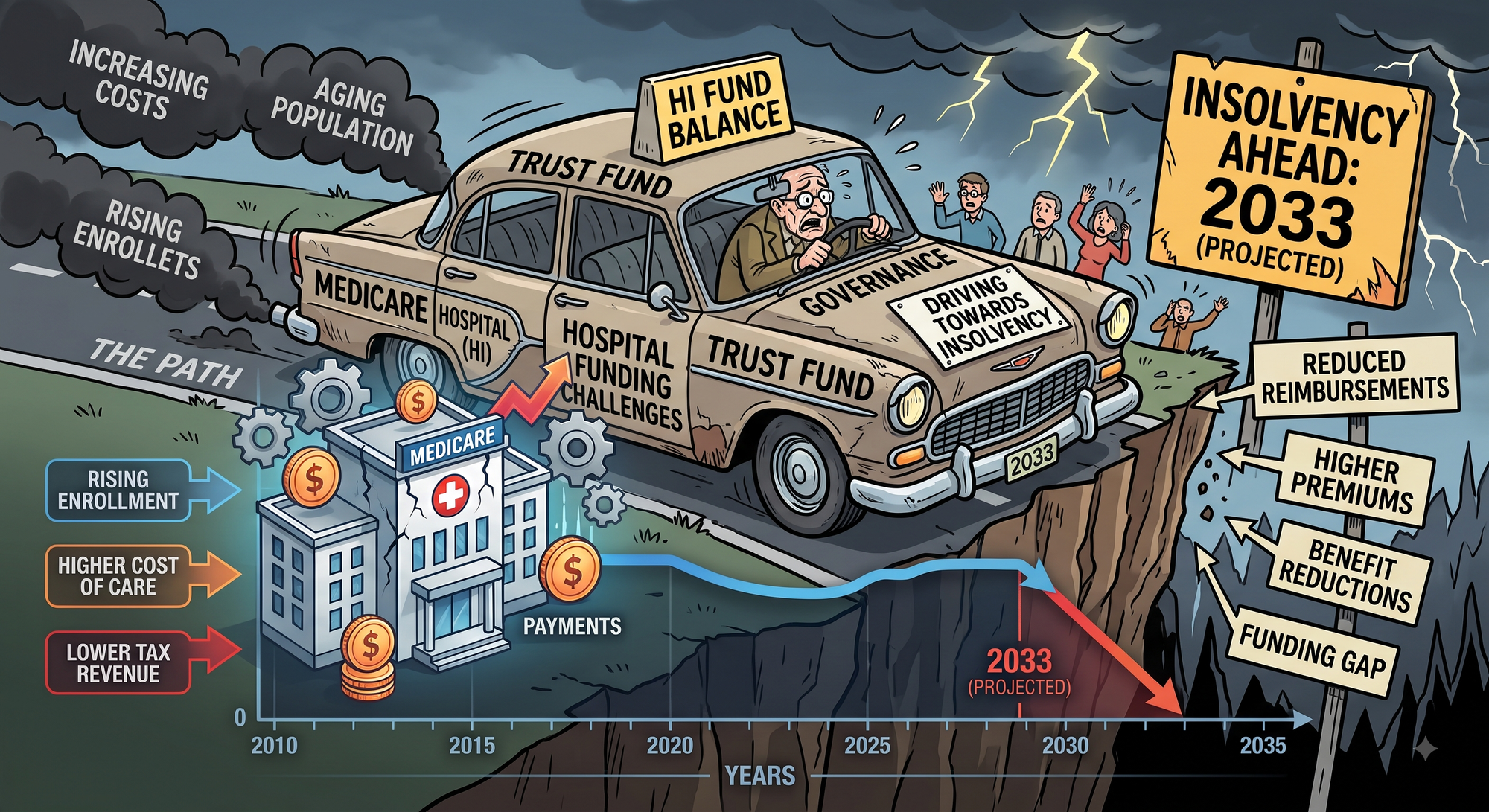
Here is the part nobody in Washington wants to say out loud: Medicare is going broke. The program now costs more than the entire defense budget. The 2026 Trustees Report projects the Hospital Insurance trust fund will be insolvent by 2033, triggering automatic 11% cuts to hospital payments. Total Medicare costs are projected to nearly double as a share of GDP by the end of the century. The ratio of workers paying into the system to beneficiaries drawing from it continues to shrink. These are not solvable problems if every attempt to introduce cost discipline gets litigated into oblivion by the hospital lobby.
Bundled payments and prior authorization are not glamorous. They will not make anyone's stump speech. But they represent something vanishingly rare in American healthcare policy: actual, concrete steps to slow the fiscal bleeding in the largest entitlement program driving the country toward insolvency. If the administration keeps this up quietly while everyone else argues about other things, that might be the most effective reform strategy of all.
Comments ()